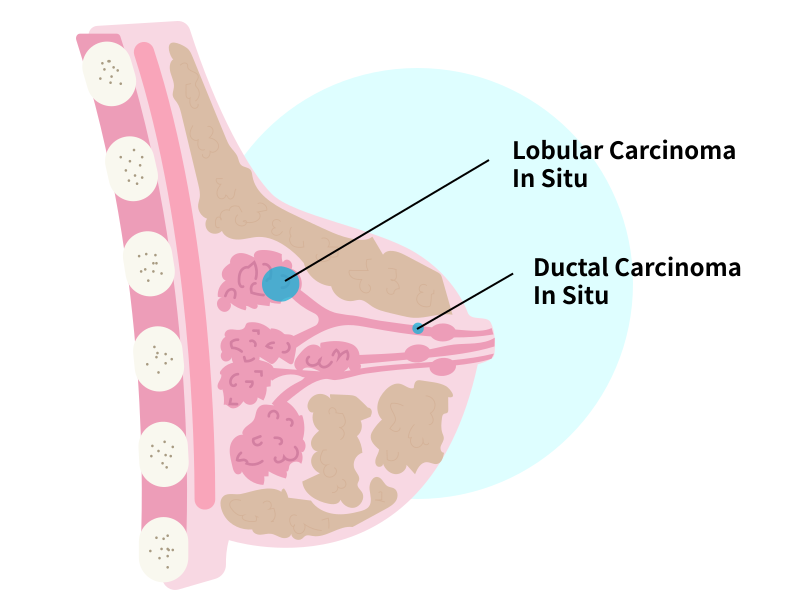
Lobular Carcinoma in Situ (LCIS)

Lobular Carcinoma in Situ (LCIS) is not breast cancer, but it does increase a person’s risk of developing breast cancer in the future. LCIS is best described as a marker of increased risk, rather than a disease that needs cancer treatment.

What Is LCIS?

LCIS occurs when abnormal cells grow in the milk-producing glands (lobules) of the breast. Despite its name, LCIS:

  • Is not invasive
  • Does not spread beyond the lobules
  • Is not life-threatening
  • Usually causes no symptoms

LCIS is often found incidentally during a biopsy performed for another reason, such as a mammogram finding or a benign breast lump.

How Does LCIS Affect Breast Cancer Risk?

While LCIS is not a disease that requires cancer treatment, it does increase a patient’s lifetime risk of developing breast cancer.

Importantly, LCIS itself does not turn into cancer, but it signals that the breast tissue is more susceptible to cancer development over time.

  • People with LCIS are estimated to have a 7–12 times higher risk of developing breast cancer compared to the general population.
  • The increased risk applies to both breasts, not just the breast where LCIS was found.
  • LCIS can increase the risk of both invasive ductal cancer and invasive lobular cancer.

Who Is Most Commonly Diagnosed With LCIS?

LCIS is most often diagnosed in:

  • Women between the ages of 40 and 60
  • Individuals undergoing breast biopsies for abnormal imaging
  • People with additional risk factors, such as:
    • A family history of breast cancer
    • Dense breast tissue
    • Hormonal or reproductive risk factors

LCIS can also occur in men, though this is rarer.

How Is LCIS Managed?

Because LCIS is not cancer, treatment usually focuses on risk reduction and careful monitoring, rather than surgery or chemotherapy.

Management may include:

  • Regular breast screening, such as annual mammograms
  • Breast MRIs, for some higher-risk individuals
  • Clinical breast exams at regular intervals
  • Risk-reducing medications (such as hormone-blocking therapy) for some patients
  • Lifestyle modifications, including maintaining a healthy weight and limiting alcohol

Preventive surgery is rarely recommended and is reserved only for people with a very high overall risk.

Why Ongoing Monitoring Matters

LCIS is often referred to as a “warning sign” rather than a diagnosis. With appropriate follow-up:

  • Breast cancer can often be detected at an early, highly treatable stage
  • Many people with LCIS never develop breast cancer
  • In general, long-term outcomes are excellent
A Closing Message

Being diagnosed with LCIS can sound frightening, but it is important to remember:

  • LCIS is not breast cancer
  • It does not require cancer treatment
This site is registered on wpml.org as a development site. Switch to a production site key to remove this banner.